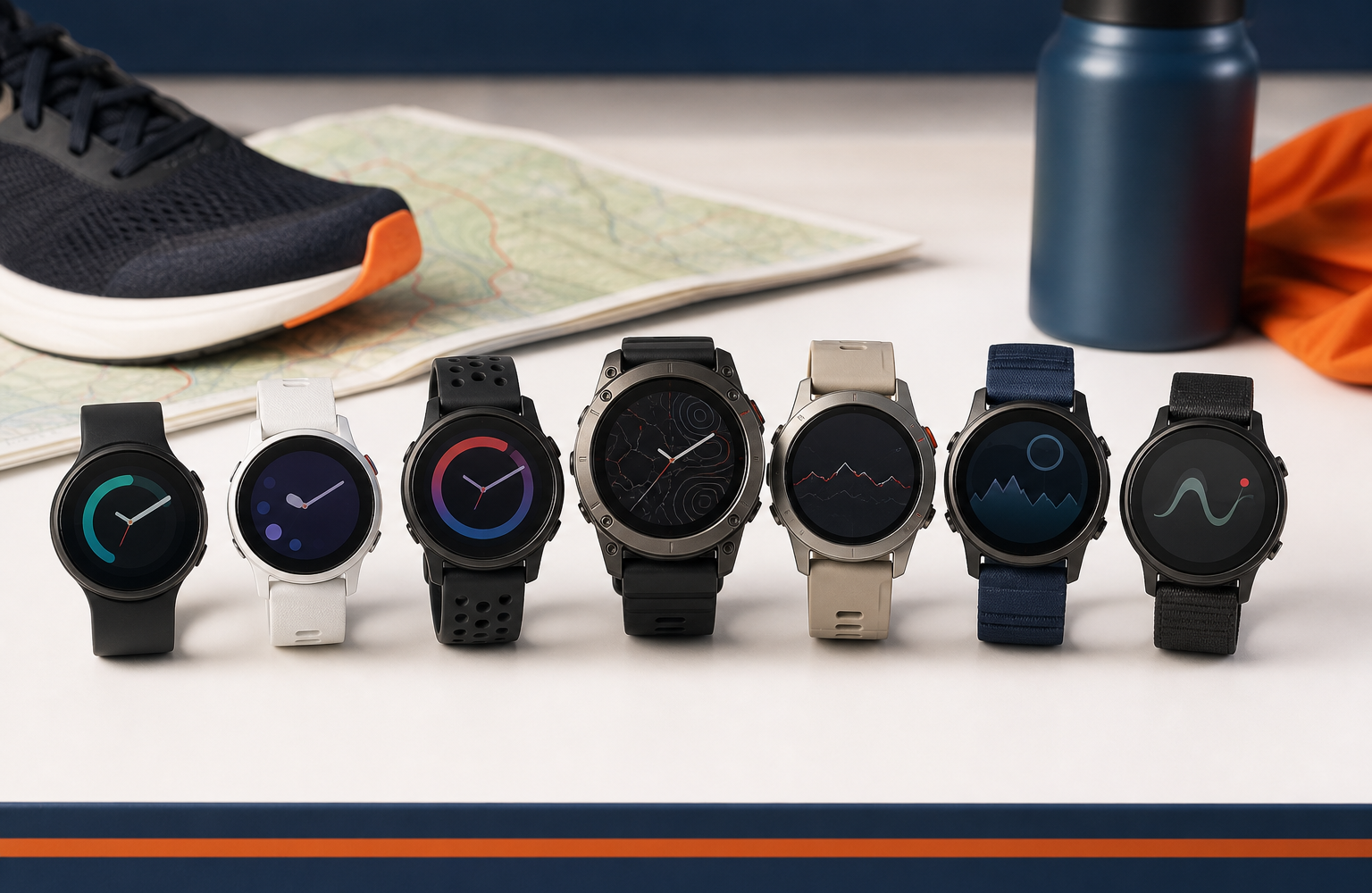
Quick answer: the best running watch depends on your training, phone, budget and battery needs. For many runners, the Garmin Forerunner 265 offers the strongest balance of training features and usability. The COROS Pace 4 is a compelling lightweight value option, while the Garmin Forerunner 970 targets athletes who want premium mapping and performance features.
Editorial note: this guide is an independent analysis based on documented specifications, software features, Australian-market positioning and our individual review assessments. It does not claim that every watch was physically tested side by side. Prices and availability change, so confirm current retailer information before purchasing.
Best running watches in Australia: quick picks
| Watch | Best for | Key consideration |
|---|---|---|
| Garmin Forerunner 265 | Most runners | Balanced training features and AMOLED display |
| COROS Pace 4 | Lightweight value | Strong battery-oriented running focus |
| Garmin Forerunner 970 | Performance and mapping | Premium price |
| Garmin Forerunner 165 | New runners | Simpler feature set |
| Garmin Forerunner 55 | Budget basics | Older display and platform |
| Apple Watch Ultra 3 | iPhone users | Smartwatch strengths with shorter endurance than some sports watches |
| Google Pixel Watch 4 | Wear OS users | Smart features take priority over specialist endurance tools |
1. Garmin Forerunner 265 — best for most runners
The Forerunner 265 sits in the useful middle of Garmin’s range. It combines a bright AMOLED display with structured workouts, recovery information, multisport support and the wider Garmin training ecosystem. It suits runners preparing for their first serious race as well as experienced athletes who do not need the most expensive mapping features.
Read our Garmin Forerunner 265 analysis.
2. COROS Pace 4 — best lightweight value option
COROS has built its reputation around low weight, battery efficiency and focused endurance features. The Pace 4 is worth comparing when simplicity and long training weeks matter more than a large smartwatch app ecosystem.
Read our COROS Pace 4 analysis.
3. Garmin Forerunner 970 — best premium performance option
The Forerunner 970 targets runners and multisport athletes who want Garmin’s broadest training and navigation capability in the Forerunner family. It makes the most sense when advanced features will actually be used; otherwise, the mid-range models can provide better value.
Read our Garmin Forerunner 970 analysis.
4. Garmin Forerunner 165 — best starting point
The Forerunner 165 is easier to justify for newer runners who want proper GPS tracking and training guidance without paying for extensive multisport and mapping tools.
Read our Garmin Forerunner 165 analysis.
5. Garmin Forerunner 55 — best for straightforward basics
The Forerunner 55 covers the essentials: distance, pace, heart rate and structured running support. Its simpler display and older platform are trade-offs, but that can be acceptable at the right price.
Read our Garmin Forerunner 55 analysis.
6. Apple Watch Ultra 3 — best for runners using an iPhone
The Apple Watch Ultra 3 is strongest when one device needs to handle running, communication, apps and everyday smartwatch duties. Dedicated sports watches can remain preferable for very long events or athletes deeply invested in specialist training platforms.
Read our Apple Watch Ultra 3 analysis.
7. Google Pixel Watch 4 — best Wear OS choice
The Pixel Watch 4 suits Android users who want a polished Wear OS smartwatch that also records running. Runners prioritising battery life, physical controls and advanced navigation should compare it carefully with dedicated sports watches.
Read our Google Pixel Watch 4 analysis.
How to choose a running watch
Start with your actual training
A runner training three times per week for a first 10K has different needs from an ultrarunner navigating overnight. Pay for features you will use rather than the longest specification list.
Check phone compatibility
Apple Watch requires an iPhone, while Wear OS models are designed around Android. Garmin, COROS, Polar and Suunto generally support both major phone platforms, although individual features can differ.
Consider battery with margin
Advertised battery figures depend on display, GPS mode, music and sensor settings. Choose enough capacity for your longest intended activity plus a practical safety margin.
Think about controls and screen size
Touchscreens look excellent, but buttons can be easier in rain, sweat, gloves and hard intervals. Smaller wrists may benefit from lighter cases even when that means reduced battery capacity.
Our recommendation
Begin with the Garmin Forerunner 265 and COROS Pace 4 as the central comparison. Move to the Forerunner 970 if navigation and advanced performance tools justify the premium. Choose Apple or Pixel when smartwatch integration is more important than specialist endurance capability.
See our Editorial Policy and Affiliate Disclosure for information about how this guide is produced and funded.